
New commitment calls for retrofit to become the default and demolition the last resort, as Dubai's new greening guide puts existing buildings in the spotlight
Dubai, UAE: Don't Waste Buildings (DWB) UAE has today published The UAE Retrofit and Reuse Commitment. It is a public call to move the country's construction sector from a demolition-first to a reuse-first mindset. The document comes four months after DWB launched its second international chapter in the United Arab Emirates in June 2026. It sets out the new chapter's core priorities.
The Commitment follows a timely development in the emirate. On 16 September 2026, Dubai Municipality launched the Existing Buildings Greening Guide, a practical framework to support the sustainable upgrading and operation of existing buildings across Dubai. The guide sets out best practices for improving existing buildings while balancing sustainability requirements with economic feasibility. It is also designed to support more informed decision-making on retrofit and improvement projects.
DWB UAE welcomes the guide as a significant step. It sees the guide as complementary to the Commitment, because both recognise that the future of the UAE's built environment depends on getting more from the buildings it already has.
The UAE has developed a world-class built environment in only a few decades. The Commitment argues that as this stock matures, renovation and adaptive reuse can preserve invested carbon and materials, reduce demolition waste, improve operational performance and retain the social and economic value of established places.
A reuse-first approach
The Commitment says serviceable structures and façades are too often discarded before their useful life is exhausted. It also says project appraisals can favour short-term redevelopment value while overlooking whole-life carbon, avoided waste and retained asset value.
It identifies several barriers to retrofit, including uncertainty over existing-condition data, fire and life safety upgrades, accessibility, structural adaptation, authority approvals and a regional skills gap in building investigation, carbon assessment, circular design, careful deconstruction and reuse-led procurement.
The opportunity it describes is broad, including:
retaining structural frames, foundations and envelopes wherever technically and economically feasible
upgrading energy, water, indoor environmental quality, resilience and accessibility performance
converting underused offices, hotels, retail, industrial and institutional assets to meet changing needs
shortening programmes and reducing disruption
creating skilled green jobs in surveys, diagnostics, retrofit design, specialist contracting, materials recovery and asset management
protecting cultural identity and neighbourhood continuity
Eight commitments
DWB UAE has pledged to:
Advocate for a reuse-first policy approach that requires credible justification before major demolition.
Measure by championing whole-life carbon assessment, condition-based decision-making and transparent comparison of retrofit and rebuild options.
Enable proportionate, performance-based regulatory pathways that maintain safety while recognising the realities of existing buildings.
Build capability through encouraging professional training, technical guidance, research and collaboration across the retrofit value chain.
Showcase UAE and regional reuse case studies that demonstrate environmental, financial, cultural and social value.
Innovate by encouraging digital surveys, building passports, design for disassembly, material recovery and circular procurement.
Collaborate with government, industry, academia, finance and communities to remove barriers and scale good practice.
Lead by inviting public and private asset owners to adopt refurbishment-first portfolio strategies and publish their progress.
Supporting national and emirate-level direction
The Commitment supports the direction of the UAE Net Zero 2050 Strategic Initiative and the UAE Circular Economy Policy 2021–2031. It also complements emirate-level measures that promote better building performance. These include Dubai's green building framework (Al Sa’fat), Abu Dhabi's Estidama system (link opens PDF) and, most recently, Dubai Municipality's Existing Buildings Greening Guide.
Policy asks
DWB UAE's central request of governments is for policy clarity and financial incentives that make reusing existing buildings simpler and easier than wasteful demolition and rebuild.
Specifically, it calls for proportionate embodied-carbon reporting for major developments, reuse and demolition-option assessments, incentives and green finance for deep retrofit, better construction-material recovery, retrofit-focused training and public-sector leadership through refurbishment-first procurement.
The group stresses that these measures should protect health, safety and accessibility while making responsible reuse easier to evaluate and deliver.
Muhammed Arafath, UAE Chapter Lead, Don't Waste Buildings, and Head of Site Supervision, Dubai, Ramboll, said:
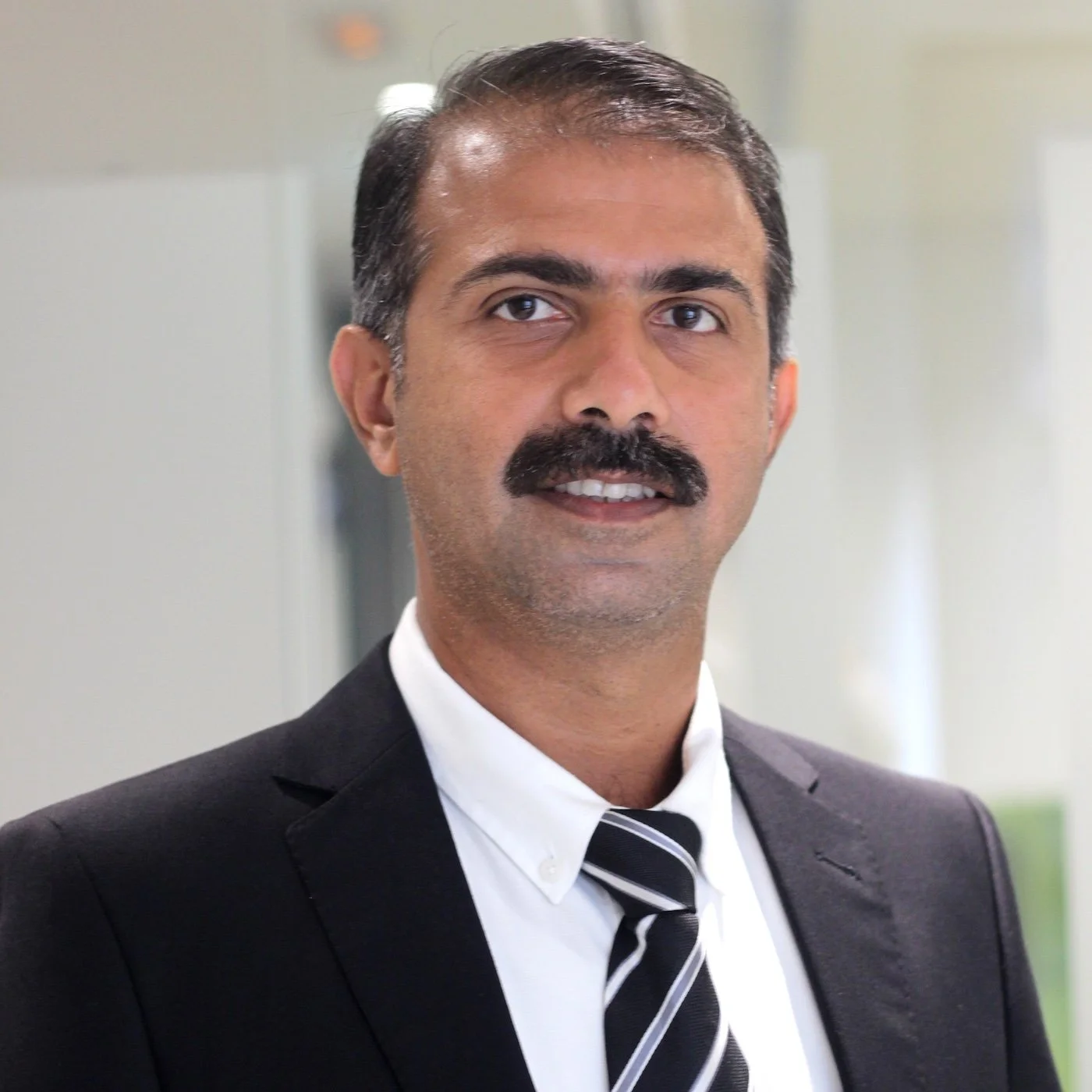
Muhammed Arafath, DWB UAE Chapter Lead
"The UAE has built one of the world's most impressive built environments in just a few decades, and much of that stock is now reaching the point where we must decide what to do with it. Too often the default answer is to demolish and start again. This Commitment asks the industry to pause and ask a different question first: what can we keep? Dubai Municipality's Existing Buildings Greening Guide shows the appetite is there, and we hope our Commitment helps build on that momentum by putting embodied carbon and reuse at the centre of the conversation. In our first year, we want to bring together owners, designers, contractors and regulators, share real UAE case studies, and show that retrofit is not only the greener choice but often the smarter one."
Richard Nelson, Co-founder, Don't Waste Buildings, and Founder & Managing Director, Abyss Global, said:
"It is fantastic to see our UAE chapter publish this Commitment so soon after launching. It shows that the case for reuse is not confined to any one climate or market. Colleagues in the UK and Australia have learned that progress comes when the industry provides evidence to help policymakers make reuse as easy as demolition. The UAE team has set out a clear, practical and proportionate agenda that does exactly that, and it is well placed to lead the conversation across the region. We are proud to support them."
Join the movement
DWB UAE is inviting investors, developers, architects, engineers, planners, asset owners, contractors, researchers, policymakers and community advocates to join the group and support the Commitment. It is also inviting public and private asset owners to adopt refurbishment-first strategies. The Commitment document is available to download here (opens PDF).
Existing buildings are not waste. They are stored carbon, materials, investment, memory and future opportunity.
ENDS
Notes to editors
About Don't Waste Buildings: Don't Waste Buildings is the voluntary effort to put a spotlight on up-front, or embodied, carbon and make the case for the productive use of empty and underperforming buildings. Founded in December 2022, the group is non-party political and run by leading property developers, financiers, architects, engineers, heritage experts and others, with a membership over 2,700 internationally. Its first international chapter launched in Australia, based in Melbourne, in April 2025, and its second in the United Arab Emirates in June 2026.
About DWB UAE: Don't Waste Buildings UAE is a non-partisan collective of architects, engineers, planners, developers, asset owners, contractors, researchers, policymakers and community advocates. It champions the repair, retrofit, refurbishment, adaptive reuse and regeneration of existing buildings across the Emirates.
For further information or media enquiries, please contact: Leanne Tritton, info@dontwastebuildings.com
Website: DontWasteBuildings.com